
Start with Razer-owned context
Open the official Chroma or Synapse 4 page and confirm the current app branch and device family.
Chroma profile guide
Looking for a Razer Chroma profiles download? Start by separating a lighting effect from a complete Synapse device profile, then check the source and hardware before importing it.
Razer's official Chroma and Synapse pages explain the ecosystem, but community-made effects are not official Razer installers. Never use a profile download as a reason to run an unknown EXE, script, or security-disabling tool.
Quick answer
A Razer Chroma profile download can mean several different things: a lighting effect, a Synapse device profile, a small import package, or a page that only shows a video and asks you to install something else. Those are not interchangeable. A Chroma effect usually describes lighting layers, while a device profile can include buttons, sensitivity, keys, audio settings, or application links.
The safest starting point is the official Razer Chroma page and the current Synapse 4 workflow. Use those pages to understand supported devices and the app branch. If you choose a community gallery for an effect, treat it as user-supplied content, inspect the file before opening it, and keep the source link with your notes. This site does not host profile files or repackage them.
A useful rule is simple: a lighting file should not need an EXE installer, a browser extension, a password-protected archive, or instructions to disable Windows security. If a supposed Chroma profile asks for any of those things, stop. The download intent is still useful, but the correct next action is source review rather than a faster click.
Source check
Razer's Chroma page is the authoritative place to understand the Chroma ecosystem, while the Razer Synapse 4 page documents the current desktop app and its device-control direction. These pages are useful even when they do not provide a single public folder of downloadable community profiles. They establish what the product is and which software branch you should be using.
Community galleries can fill the discovery gap for lighting effects. A gallery such as Razer Chroma Gallery is not a Razer-owned source, so label it as community content and review its download instructions independently. Prefer a simple effect file or documented import path. Avoid pages that hide the file type, use several forced redirects, bundle an installer, or promise that one download will unlock every device.
Before saving a community effect, record the page URL, author or publisher name when shown, file extension, supported device family, and the date you checked it. This small record helps you remove a bad effect later and prevents an old Synapse 3 package from being mistaken for a current Synapse 4 profile.
Open the official Chroma or Synapse 4 page and confirm the current app branch and device family.
Read the file type, supported hardware, author information, and import instructions before downloading.
A Chroma effect should not require an unknown EXE, script, extension, or disabled security setting.
Save the URL, date, file name, and device notes so you can undo or review the import later.
Import workflow
The exact import control depends on the effect format, the connected device, and the Synapse 4 module that owns it. Open Synapse 4, connect one supported device directly, and first confirm that the device page loads normally. If the device is missing, solve detection before judging an effect file; an import cannot make unsupported hardware appear.
When Synapse presents an import or effect-selection control, review the destination device and any warning before confirming. Apply one effect at a time and test it with a simple color or brightness change. If the effect includes several layers, note which layer changed so you can remove or disable the correct item instead of resetting the whole profile.
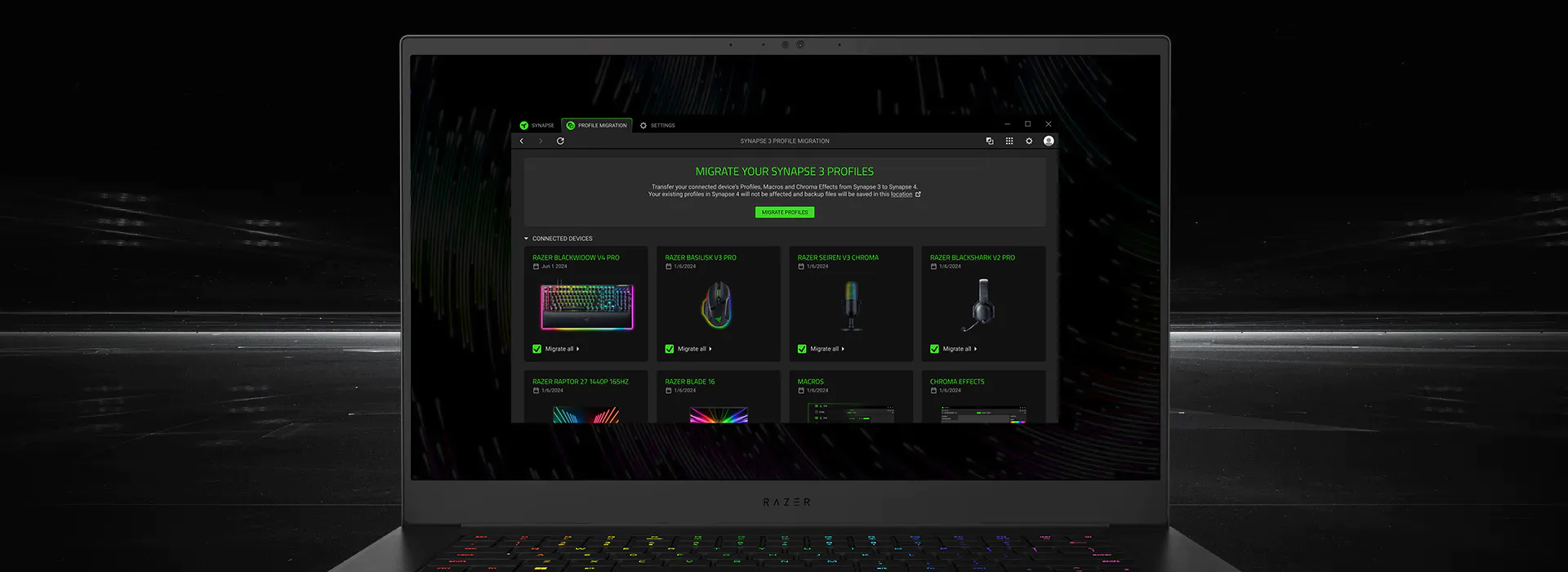
Do not confuse Synapse 3 Profile Migration with a public Chroma download. Razer's official Synapse 4 page describes Profile Migration as a way to move eligible Synapse 3 profiles, macros, and Chroma effects into Synapse 4. That is an application migration workflow, not permission to copy random configuration folders or install an old package.
Use one supported Razer device and wait until its Synapse page exposes the expected controls.
Select the Chroma-capable device or lighting module instead of applying an effect to an unrelated profile.
Use the format and import control provided by the current Synapse workflow, then test a small change.
Keep the original profile, record the effect name, and remove only the item that caused a problem.
Download checklist
The phrase Razer Chroma profiles download does not guarantee that a result is a profile. Check the extension and the page behavior. A normal image or effect asset may be useful, but an EXE, MSI, BAT, PowerShell script, or driver package is a program, not a harmless lighting preset. Do not run it merely because the page calls it a profile.
Check the current branch before troubleshooting a failed import. Synapse 4 is the current official Windows direction that Razer exposes on its product and support pages. Synapse 3 has a separate legacy status and should not be installed from a third-party mirror just to load an effect. If a profile was made for an older branch, expect device or field differences and keep a working configuration available.
A download page may also be a catalog, not the final file. Follow only a clearly explained source, verify that the final domain matches the stated publisher, and do not enter account credentials into an unrelated redirect page. When no stable direct file is available, keep the official product or community page as the destination instead of guessing a CDN path.
Troubleshooting
If an imported effect does not appear, check the selected device first. A profile made for a keyboard may not be available on a mouse, and a device may expose only the Chroma controls supported by its firmware and Synapse module. Reconnect the hardware directly, wait for the device page to load, and confirm that Synapse itself is not blank or stuck.
If the effect appears but colors or zones are wrong, reduce the test. Turn off other layers, apply a basic static color, and check whether the device is sharing a linked profile or game association. A game can activate a different profile immediately after launch, making a successful import look like it disappeared.
If Synapse cannot see the hardware at all, use the device-detection guide instead of downloading another Chroma package. If the application will not open or an installer failed, use the matching repair guide. Keeping detection, installation, profile settings, and lighting effects as separate problems makes the next action much clearer.
Verified sources
This is a download-intent site, so the current software source was checked before publishing this page. On August 4, 2026, Razer's Synapse 4 product page, Chroma page, Synapse 4 support page, and install support page returned HTTP 200. The official Windows installer route also returned HTTP 200 with application/x-msdownload and a 14,919,368-byte file.
Razer's public product page did not expose a dependable semantic build number or checksum in the material checked today. This guide therefore does not invent a latest-version label for Synapse or claim that a community effect is officially verified. The hero CTA points to the official Chroma page, and the sources below distinguish Razer-owned information from the community gallery.
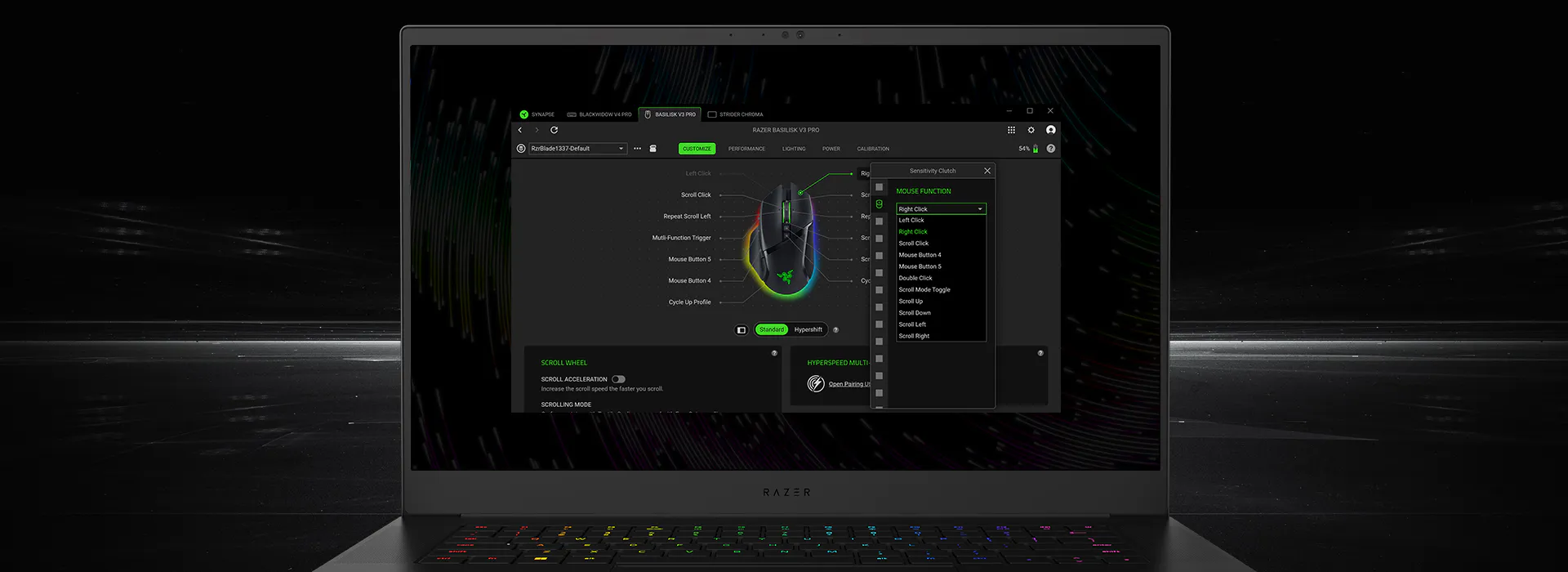
The three visuals on this page are existing compressed WebP copies of Razer-hosted product media already used by this site: the Synapse product view, a device settings screen, and the Profile Migration screen. They explain the adjacent workflow and are not presented as screenshots generated by this site or as proof that a particular community file is safe.
References
These links support the Chroma ecosystem, Synapse 4 workflow, source checks, and the distinction between official and community material.
FAQ
It usually refers to a lighting effect or profile intended for compatible Razer Chroma hardware, but the label can also be used for a full Synapse device profile or an unsafe installer. Check the file type, destination device, and source before opening it.
No. A community gallery can be useful for discovery, but it is not the same as a Razer-owned source. Treat the file and its instructions as user-supplied, and reject any package that asks for an unknown EXE, script, or disabled security setting.
Connect one supported device, wait for its Synapse page to load, use the import or effect control exposed by the current module, choose the correct destination, and test one effect at a time. The exact control depends on the file format and device.
The device may be unsupported, the file may belong to another Synapse branch, a game-linked profile may be switching immediately, or Synapse may not be detecting the hardware. Check the device and app state before downloading again.
No. A Chroma effect focuses on lighting layers, while a device profile can include buttons, keys, sensitivity, audio, macros, or application links. Onboard memory and migration data are separate boundaries as well.